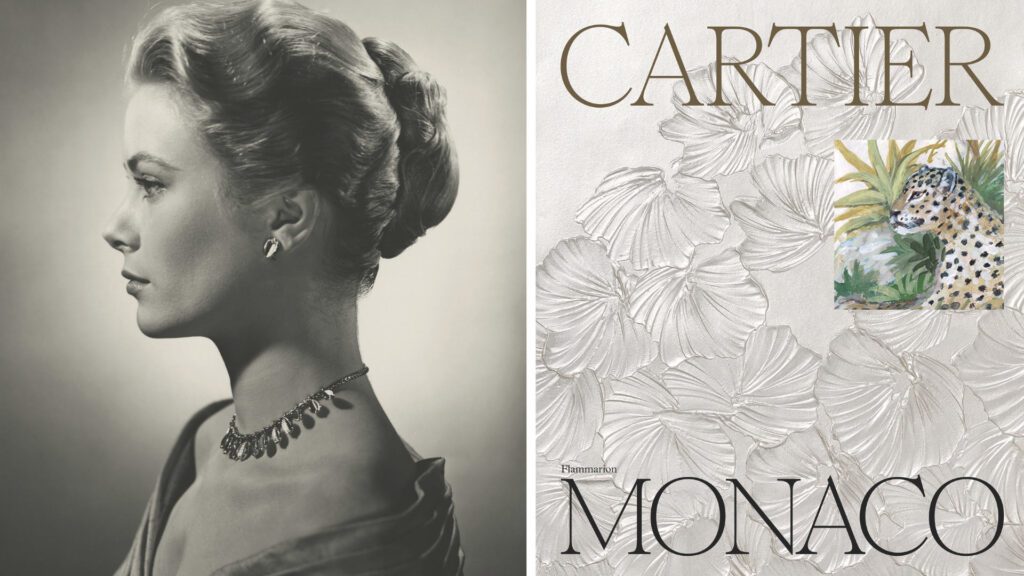
A NEW VOLUME FROM FLAMMARION CHRONICLES CARTIER AND MONACO’S LONG, STORIED ASSOCIATION
BY SEBASTIAN PHILLIPS
One can’t speak about the history of Cartier for too long without mentioning Monaco. Certain pundits might even say the history of Cartier is the history of Monaco. The principality, a haven of wealth and excess on the Mediterranean, is as interwoven into Cartier’s story as emeralds on a Panthère bracelet. And like all good stories, this one has it all: family drama, aristocratic intrigue, celebrity gossip, and extraordinary wealth. These anecdotes are the backbone of Cartier Monaco, a new coffee table book from Flammarion that documents the colorful relationship between the renowned jeweler and the European principality.
“Monaco was part of the Cartier empire’s expansion plan from the beginning of the 20th century,” says Alexandra Campbell, one of the book’s authors. “Naturally, the Cartier family followed the money and responded to demand from clients. Before the First World War, these were predominantly European royalty and aristocracy, as well as well-heeled Americans who were discovering this delightful playground in the South of France.”
To say Cartier was at the right place at the right time is an understatement. According to Campbell, the royal Grimaldis and the Cartier brothers moved in the same circles and were close throughout the early 20th century. Their relationship was bolstered after the jeweler’s Place du Casino boutique flourished following its 1921 debut, and then firmly solidified by the time Grace Kelly entered the picture and her 10.48-carat diamond engagement ring made headlines around the world.
Cartier’s creations went on to appear on Kelly throughout her time as Monaco’s princess consort until her death in 1982, but she was hardly the brand’s only high-profile client. Edward VIII and Wallis Simpson were known to exchange Cartier keepsakes, and the prince helped to design many of the pieces he gifted his wife. Poet, playwright, and novelist Jean Cocteau liked to wear two Trinity rings on his little finger after Louis Cartier created the piece for him in 1924. Elizabeth Taylor was gifted Cartier—and often—by a few of her husbands, but the anecdote that stands out in the book involves her third husband, Mike Todd, presenting her with a diamond and ruby parure by the pool of Villa La Fiorentina in Saint-Jean-Cap-Ferrat. As there was no mirror nearby, Taylor had to look in the water for her reflection. “The jewelry was so glorious, rippling red and [sparkling] in the sun,” she later wrote in her memoirs. Richard Burton outdid Todd years later when he gave Taylor a Cartier necklace featuring a 69.42-carat pear-shaped stone that would go on to be known as the Taylor-Burton diamond.
Beyond the tome’s anecdotes are its high-impact visuals. In addition to photographs of the aforementioned luminaries, readers are treated to colorful spreads of Cartier jewels in which every detail is visible, old newspaper clippings, designer sketches, and behind-the-scenes moments of artisans at work. It’s a compelling record commensurate with its subject matter.
“Cartier was able to transform dreams into reality,” says Campbell. “The imagination, style, and timeless elegance of the brand is impossible to beat.” rizzoliusa.com