L’OBJET ON THE PARALLELS BETWEEN FRAGRANCE AND FINE DINNERWARE
BY JILLIAN DARA
For Elad Yifrach, founder and creative director of L’OBJET, fragrance and design have never existed in separate worlds. From the beginning, scent has been part of the brand’s universe, appearing alongside the hand-gilded porcelain and meticulously crafted objects that established L’OBJET as a modern expression of luxury.
More than a decade after founding the brand, Yifrach expanded that sensory language with the introduction of L’OBJET’s apothecary collection, a series of soaps, lotions, and bath salts inspired by the landscapes and rituals of his native Mediterranean. In 2023, he took what felt like the natural evolution of that vision: launching L’OBJET’s first collection of personal fragrances.
The intention was never to create a separate fragrance category, but rather to extend the same design philosophy into scent. “It had to descend from the same lineage as everything else we make,” says Yifrach. Just as L’OBJET’s ceramics rely on exceptional materials and craftsmanship, its fragrances are built around the finest ingredients and the expertise of master perfumers. “A perfumer layering rare ingredients is doing exactly what our artisans do with a glaze or a stone, building something with depth and texture, refined and bold at once.”
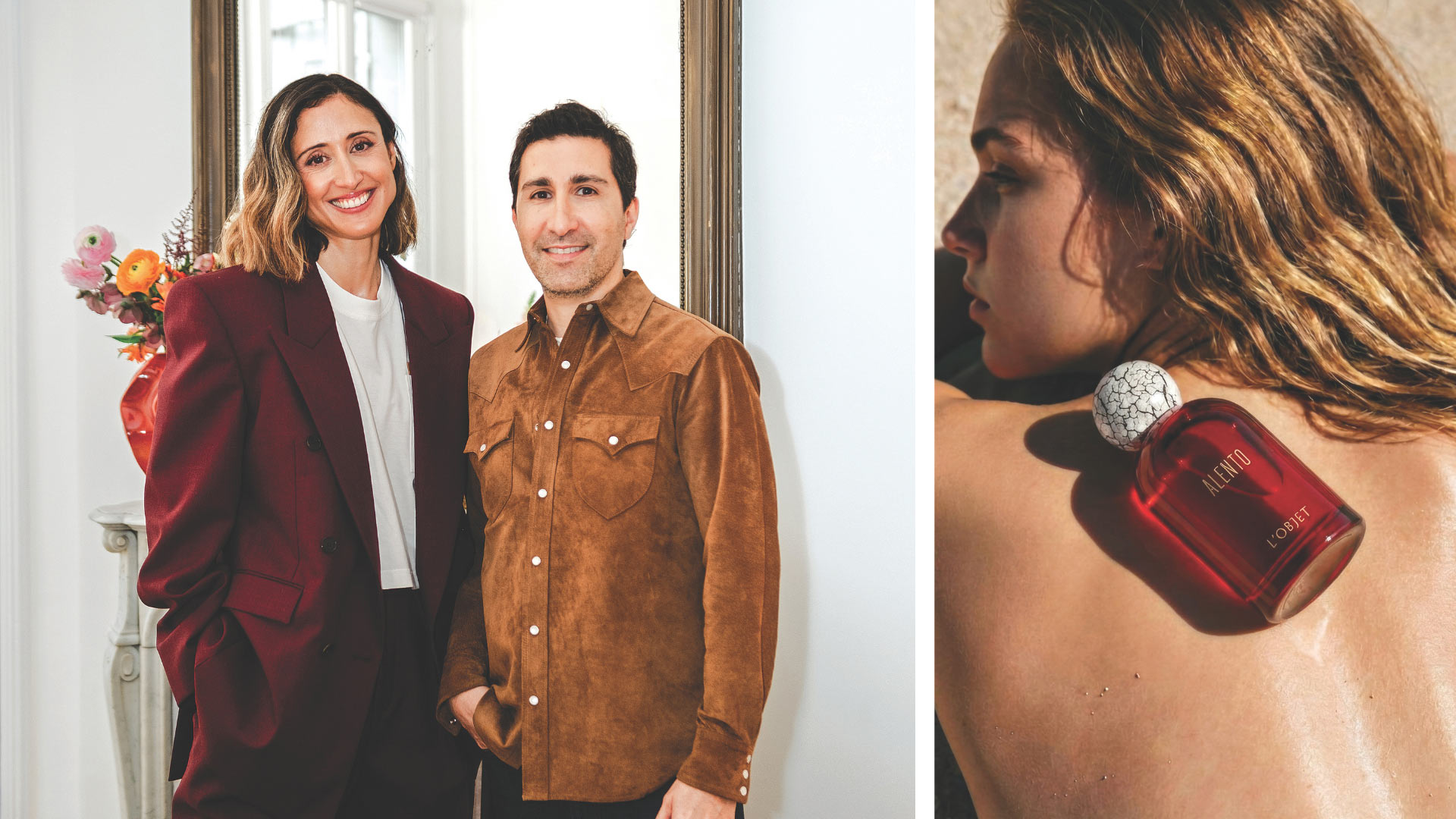
In August, L’OBJET introduced Ojai and Alento, two new eau de parfums inspired by California’s golden light and ethereal landscapes. Created in collaboration with Paris-based perfumer Cécile Zarokian, the fragrances represent a more expressive chapter for the collection, housed in a new garnet-colored vessel that captures their intensity.
The bottle itself continues a story that began long before fragrance. Its bell-shaped silhouette and lacquered wooden stopper reference the amphora, the ancient Mediterranean vessel that has long served as both a functional object and a work of art. “A vessel with ancient roots,” Yifrach explains, “finished using the techniques we’ve always used on our porcelain.”
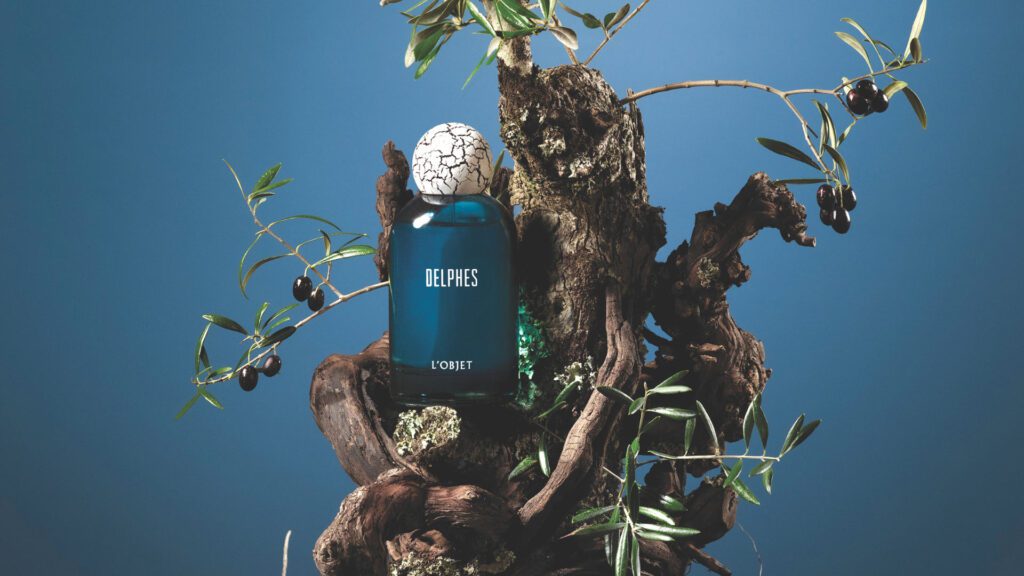
The connection is most evident in the handcrafted cap, finished with a craquelé effect inspired by L’OBJET’s ceramics. Created through a chemical reaction rather than a standardized process, each piece carries subtle variations, an embrace of imperfection in an age of mass production.
“Perfume has become such an industrial category where every bottle on a shelf starts to look like the last one,” says Yifrach. “I wanted the cap to bring the hand back into something that’s usually just extruded and mass-produced—a small, unrepeatable object of craftsmanship sitting on top of the fragrance.”