ON TRACK TO BECOME A CERTIFIED BLUE ZONE, MIAMI BEACH AIMS TO BE THE SEXIEST PLACE ON EARTH TO LIVE LONG—AND WELL.
BY JEAN NAYAR
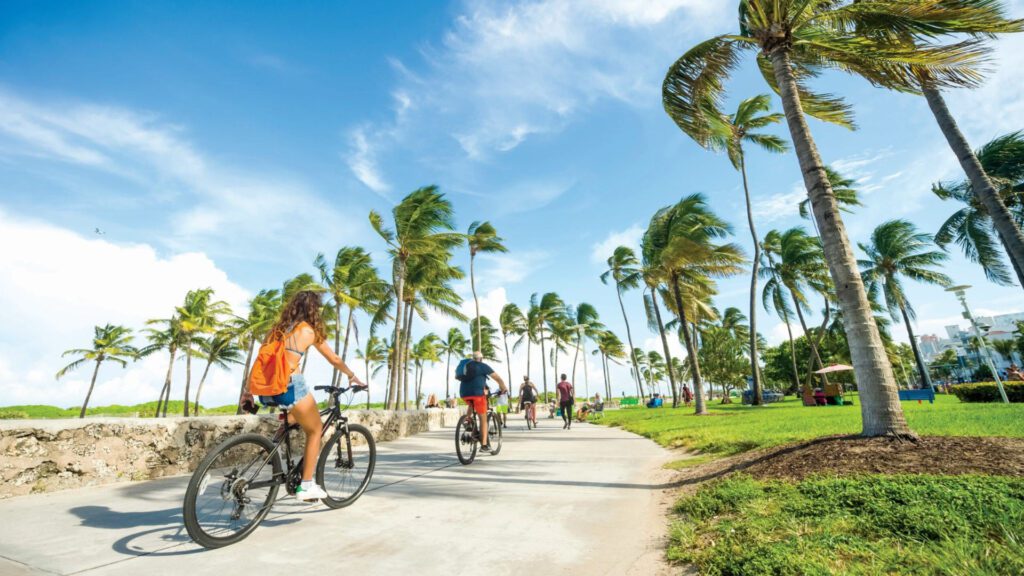
Known for its powdery beaches, crystalline waters, tree-filled parks, and broad boardwalks, Miami Beach has all the elements for healthy living baked into its DNA. And thanks to a Blue Zone Project initiative launched last year by the City Commission, it’s now poised to elevate its reputation as a premier setting for health and fitness to a new level. “As a Blue Zone, Miami Beach residents will not only live longer, healthier lives but will also enjoy a better quality of life all around, whether they live in a four-story walkup or a $40 million penthouse,” says Commissioner Tanya Katzoff Bhatt, who is spearheading the initiative.
Developed by author, explorer, and National Geographic Fellow Dan Buettner, Blue Zone is a term he coined after identifying regions, such as Sardinia, Italy, or Okinawa, Japan, whose populations enjoy entrenched healthy lifestyles and exceptional longevity. Motivated to share the lessons learned from these places, he founded the Blue Zones organization and collaborated with notable researchers to create a replicable template for health and wellness with clear criteria and innovative techniques that allow other places to build healthier populations around the globe. The first step for any county, city, civic group, or business seeking Blue Zone certification is to undertake a feasibility study, which Miami Beach’s commissioners and its mayor, Steven Meiner, unanimously supported and implemented last year.
With the study now complete, Katzoff Bhatt is working to bring in potential partners, such as Mount Sinai Medical Center, the Jackson Health System, and the Miami Foundation, and raise $8 million in funding to move Miami Beach toward Blue Zone certification. “Once funding is in place, we’ll hire a board of directors and develop a strategic plan for meeting the recommendations of the feasibility study and get Miami Beach certified,” says Katzoff Bhatt, noting that many of the city’s hospitality groups, restaurants, and other businesses are already aligned with becoming part of the program. “Miami Beach is sexier than any other place in the world, and being a Blue Zone will only add to its sizzle and spark. Everyone involved—from residents and business owners to school board members and policymakers—will contribute to making wellbeing a priority here by instituting practices and developing programs, such as senior soccer leagues or afterschool cooking classes, that will build a stronger sense of community tied to healthy living.”
Data on similar efforts is impressive. “The impact on public health is incontrovertible, with school attendance up and employee sick days down in places that have Blue Zone certification,” explains the Commissioner. “As soon as we pushed play on the Blue Zone Project, we began to see a halo effect as thought leaders in Miami Beach immediately began to envision new events centered around wellness as Spring Break alternatives to partying.”
To ensure the entities and places that earn Blue Zone certification endure over the long haul, the organization’s approach to promoting good health is inclusive and comprehensive, aiming to change broad populations through building design and the built environment, as well as policy, programs, and social networks, so that making healthy choices is woven into the texture of the community. Even before the city achieves final certification in four or five years, Katzoff Bhatt expects the Blue Zone effect to start to take hold. “Once we reach a critical mass and key groups start implementing healthy living strategies,” she says, “we’ll soon see all boats rising with long-term benefits—like healthier, longer lives, deeper social connections across generations, improved productivity, and lower healthcare costs—for all.”