REFLECTING A REVERENCE FOR ARTISANSHIP, WARMTH, AND PROPORTION, DESIGNER BRIGGS EDWARD SOLOMON TURNS A TRADITIONAL WATERFRONT DWELLING IN CORAL GABLES INTO A MEDITATIVE MODERN OASIS
BY JEAN NAYAR
PHOTOS BY DOUGLAS FRIEDMAN PHOTOGRAPHY
Ask Briggs Edward Solomon what drives his approach to design, and he’s likely to respond with two words—beauty and balance. “When it comes to interiors, what’s most important is the architectural shell—it should be so beautiful that even when it’s empty it speaks for itself—and everything in it has to balance out,” says the Michigan-born, Miami-based designer.
Without question, his work in this stunning private estate in the exclusive Journey’s End neighborhood of Coral Gables epitomizes that ethos.
Given free rein to transform the dated 8,700-square-foot waterfront home into a timeless, exceptionally livable dwelling for a high-powered couple, Solomon took on the home’s interiors as he would a work of art, shaping each room with thoughtful emphasis on proportion, clean lines, and a considered mix of quality materials. “Every home needs to tell a story, to be curated for the people who live in it,” says the designer, who is, in fact, an artist by training and started his career as a clothing designer. As such, he brings an artful hand and a craftsman’s attention to detail not just to every surface but also to the placement and quality of each accent, piece of furniture, and work of art throughout a home.
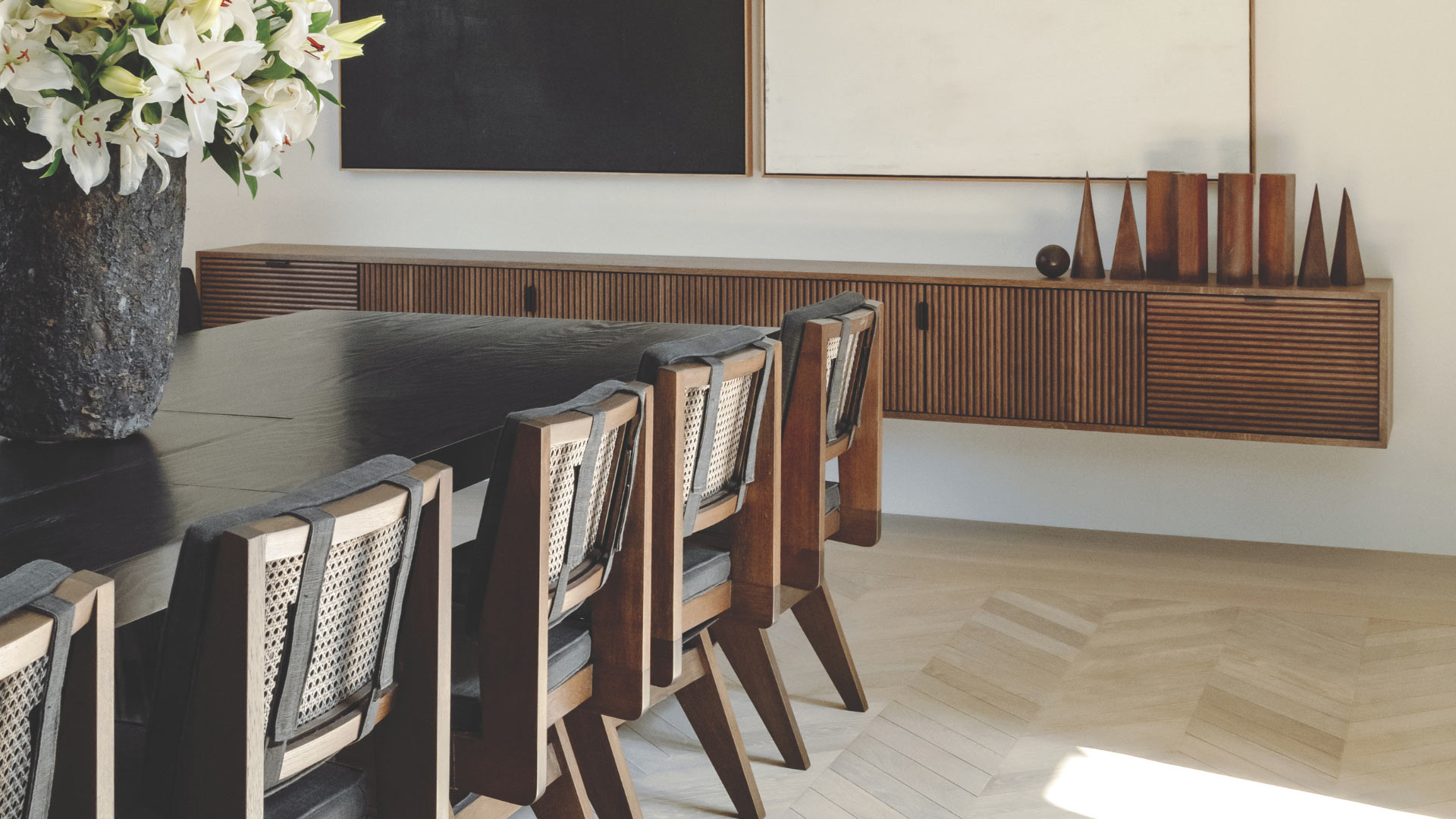
Here, Solomon began by gutting the interiors down to the studs, then started fresh from scratch. “The rooms were very formal and dark with heavily carved cabinets, ornate brass chandeliers, and lots of gilt and fringe,” explains the designer, who completely reimagined the interiors with quiet restraint and enduring appeal. Original metal-framed windows and doors were replaced throughout with custom divided light panes in painted wood frames that let in natural light while adding character. The pièce de résistance—a completely revamped sculptural staircase coated in creamy plaster and capped with a shapely high-gloss handrail—swoops along one side of the foyer like a frozen waterfall. And a fresh palette of natural materials—smooth plaster walls, wide-plank white oak floors, concrete tiles, new and reclaimed marble and wood—creates a clean yet subtly textured backdrop that allows a carefully edited collection of custom, vintage, and antique furnishings to come to life.
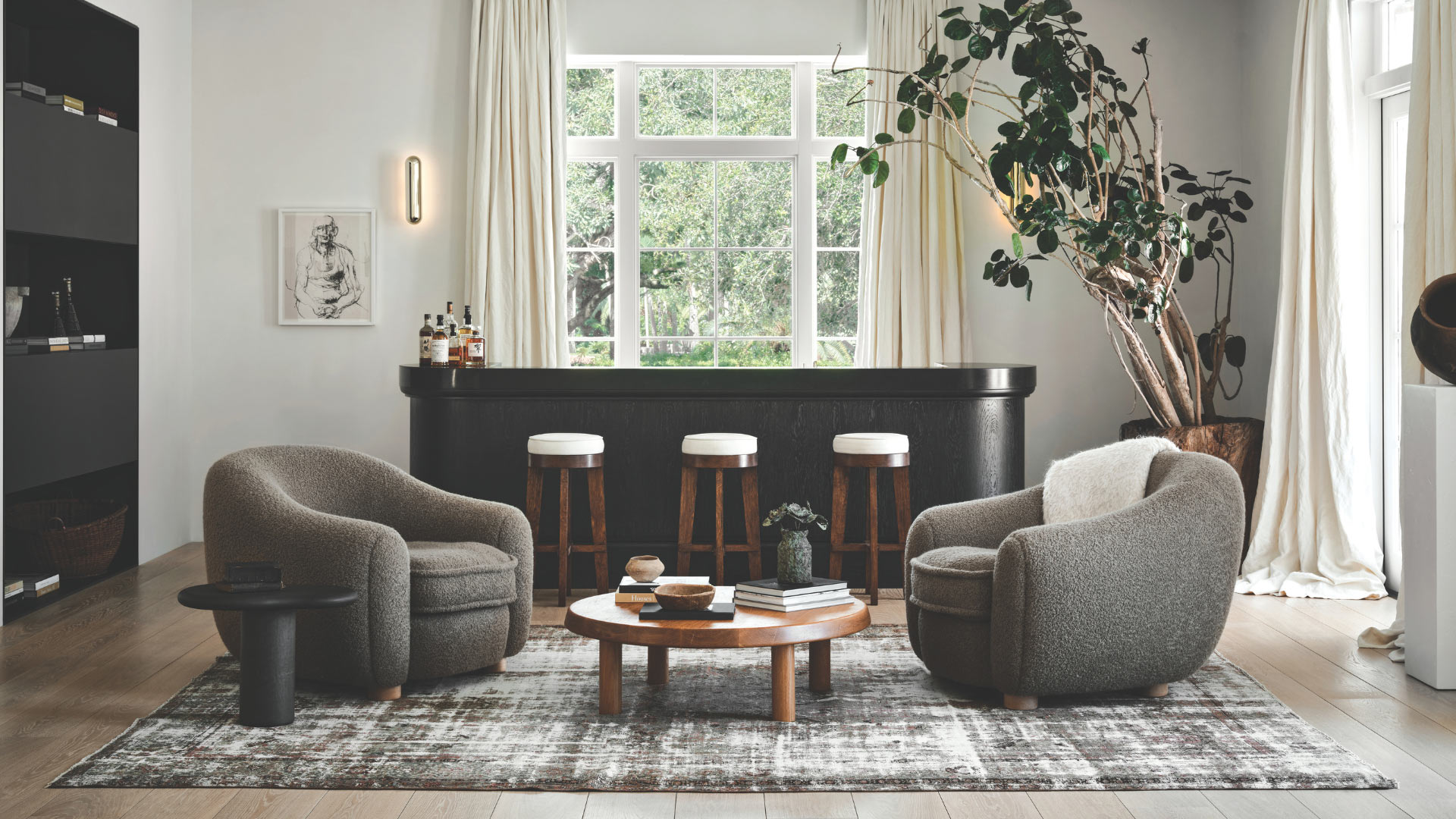
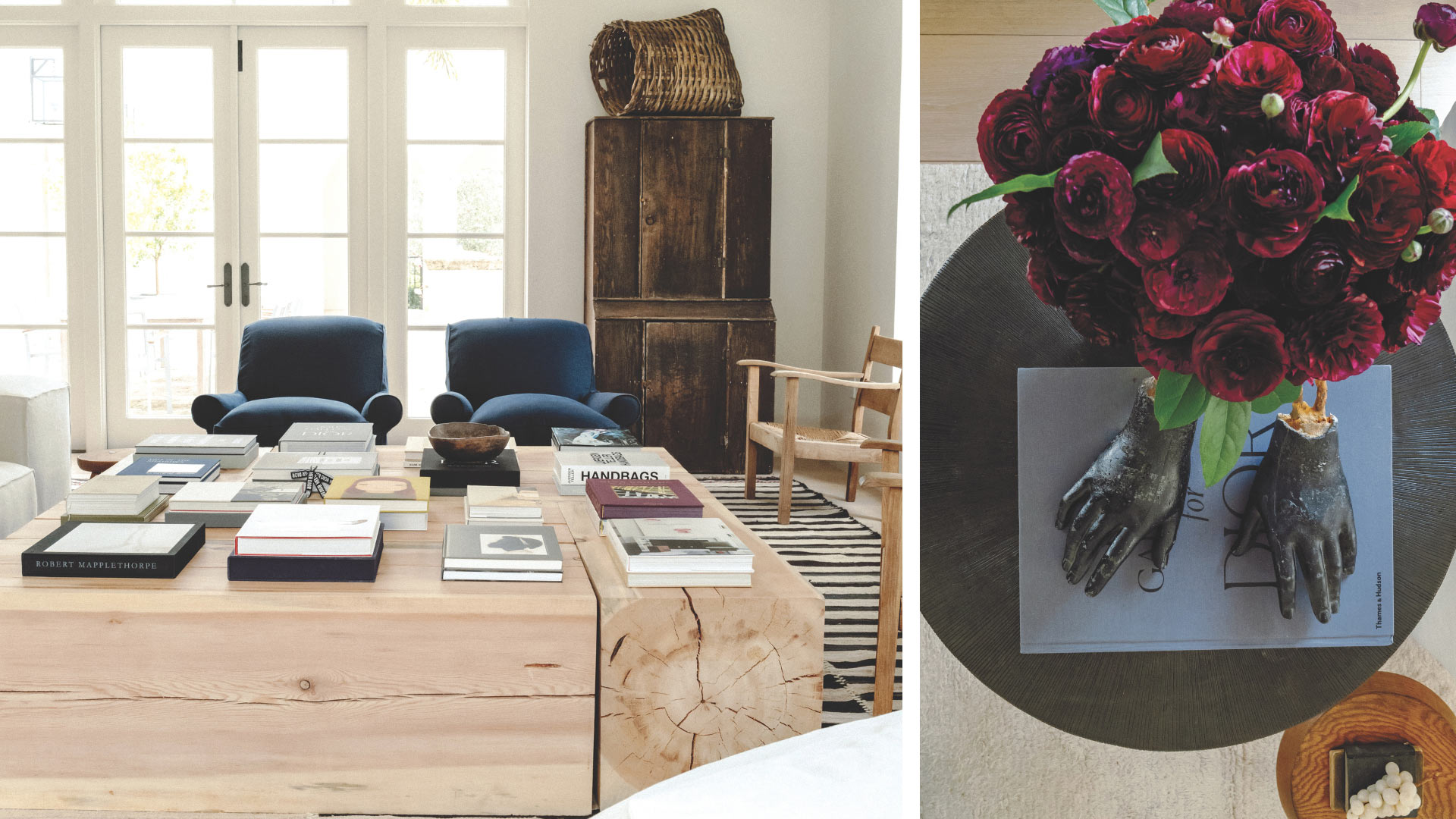
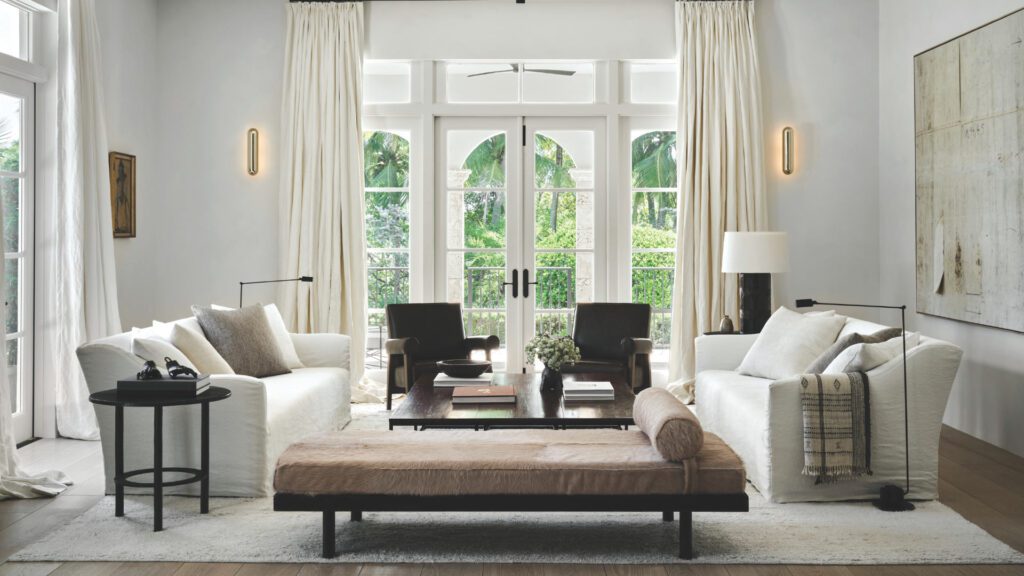
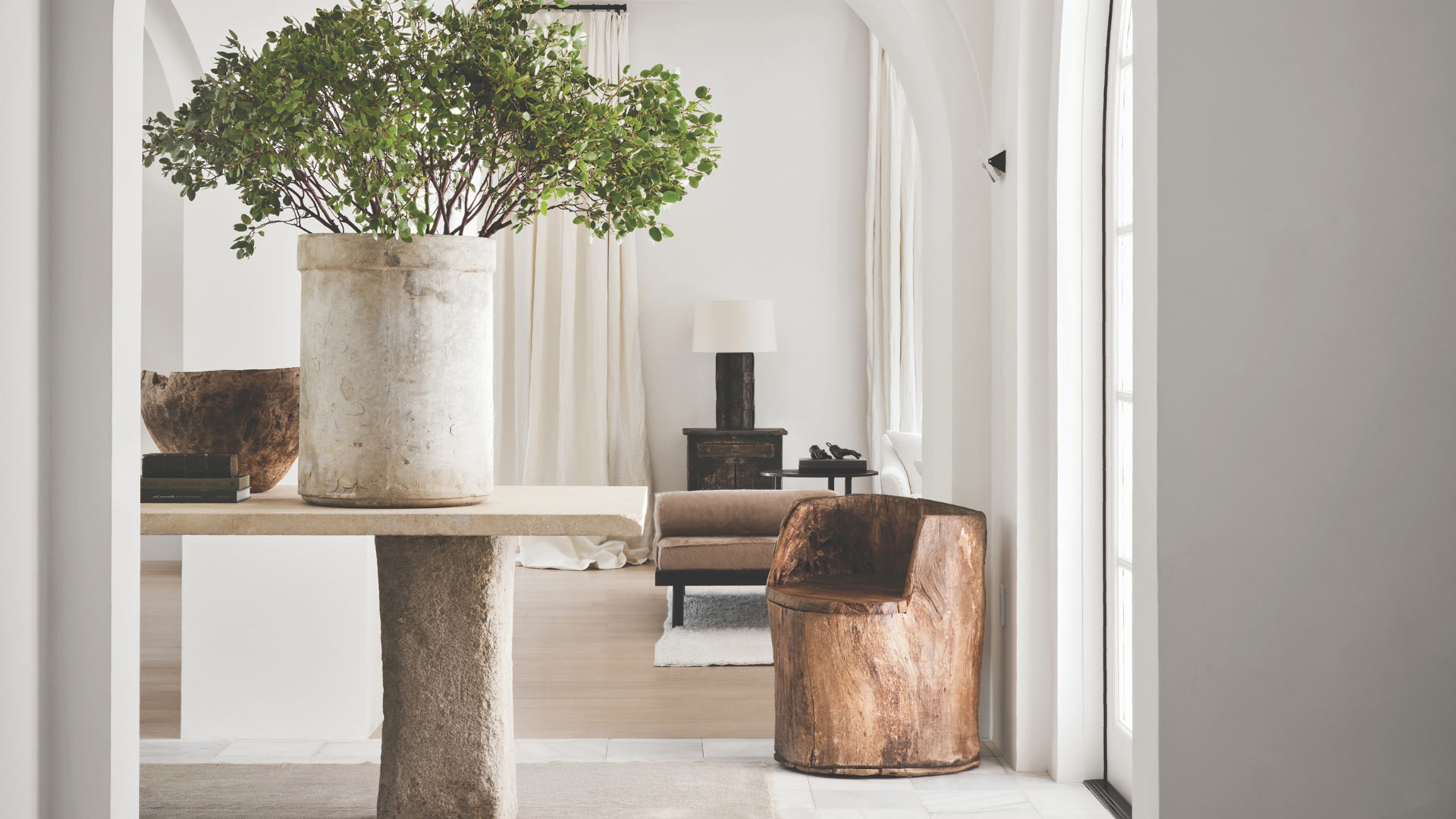
“I like mixing primitive things with contemporary pieces, rustic with polished, cool metal and stone with warm fabrics and wood, and beautiful objects and furniture from every time period so that rooms feel layered and timeless,” says Solomon, who believes every project should be bespoke and always collaborates with skilled artisans. Intimations of his artistic instincts and compositional skill begin to unfold in the arched foyer, where a rustic chair carved from an 18th-century stump contrasts with an alabaster vase from the 1930s and a branch-filled 1960s garden pot by Willy Guhl atop a sculptural hall table. In the living space beyond, a medley of iconic midcentury furnishings—a 1950s daybed by Charlotte Perriand recovered in hair-on horsehide, a pair of 1960s Pierre Jeanneret armchairs retrofitted in chocolate brown leather, and a quartet of French Deco lounge chairs by Jean Royère reupholstered in a dense bouclé—unites European high design from across the 20th century in a congenial ensemble accented with light fixtures and objects by contemporary masters like French visionary Joseph Dirand and British craftsman Alexander Lamont.
The nuanced neutral color palette—shades of gray, brown, black, and white—sets a soulful, meditative tone throughout, yet certain elements, such as the Rosso Levanto Italian marble—“like the color of merlot,” notes Solomon—in a powder room, shift the tempo here and there with occasional shots of complex color. Considered works of contemporary and vintage art, antique curios, and precious objects (many found in Parisian antiques shops) finish off rooms with notes of depth and dimension. In a region where interiors often are defined with bright colors and slick forms, Solomon’s subdued brand of minimalism offers a refreshing counterpoint—a soothing sensibility that speaks instead in low tones with deliberate gestures that subtly signal power and softly whisper luxury.