ANYA FREEMAN HAS AN UNEXPECTEDLY ELEGANT SOLUTION FOR ONE OF MIAMI’S LEAST GLAMOROUS NECESSITIES.
BY RILEY KAMINER
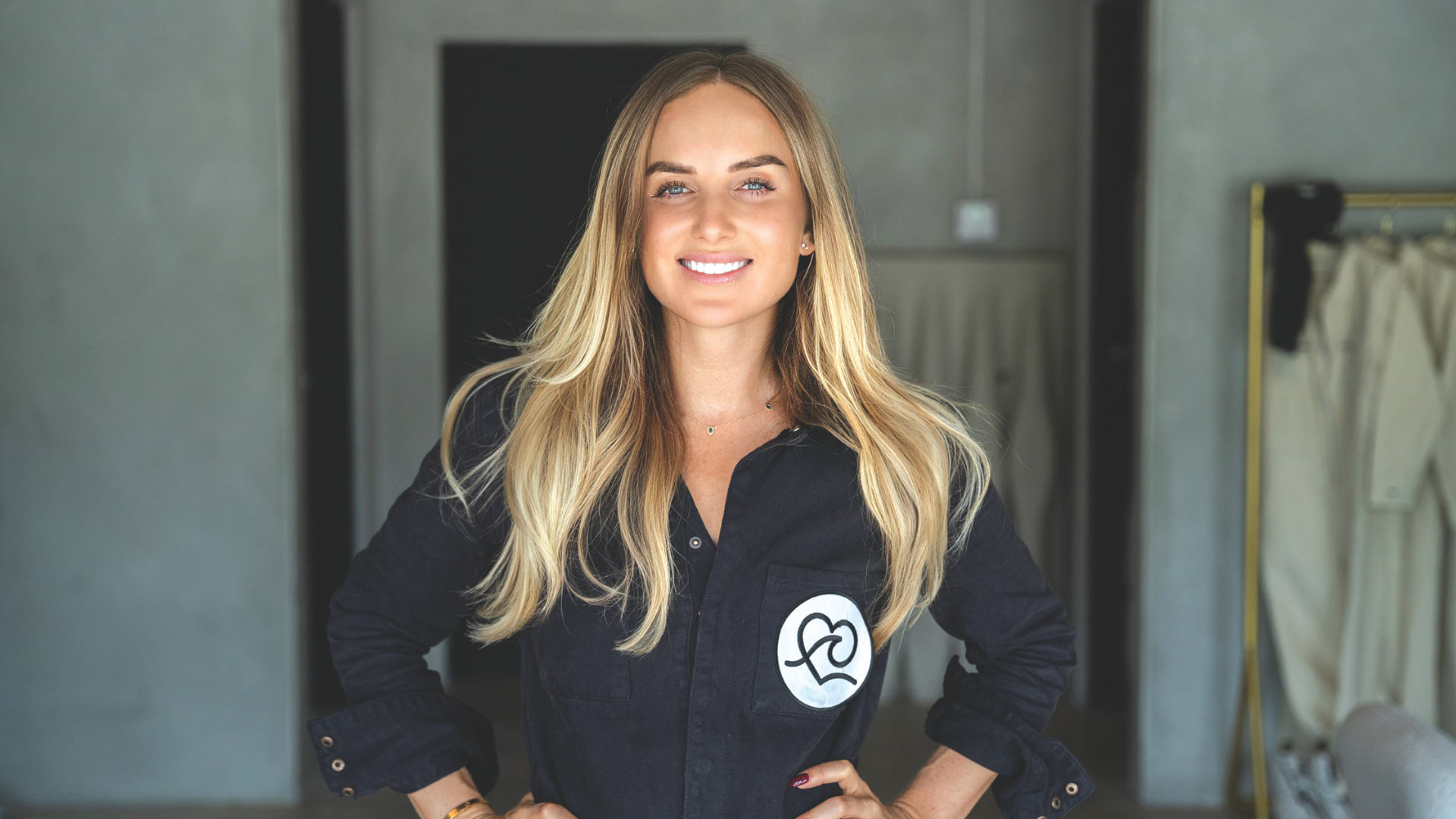
Beautiful things already exist in nature,” says Anya Freeman. It is a deceptively simple observation, particularly from a woman whose business involves enormous 3D printers, marine-grade concrete, and the increasingly complicated matter of keeping Miami above water.
Freeman, a former attorney turned ClimateTech entrepreneur, is the founder of Kind Designs, a Miami company reconsidering one of the city’s most necessary and least seductive pieces of infrastructure: the seawall.
Miami has spent decades perfecting its relationship with the water. It has built hotels beside it, towers above it, and an entire mythology around its particular shade of blue. The seawalls, however, have remained stubbornly utilitarian: flat expanses of gray concrete performing the aesthetically thankless work of keeping the city dry.
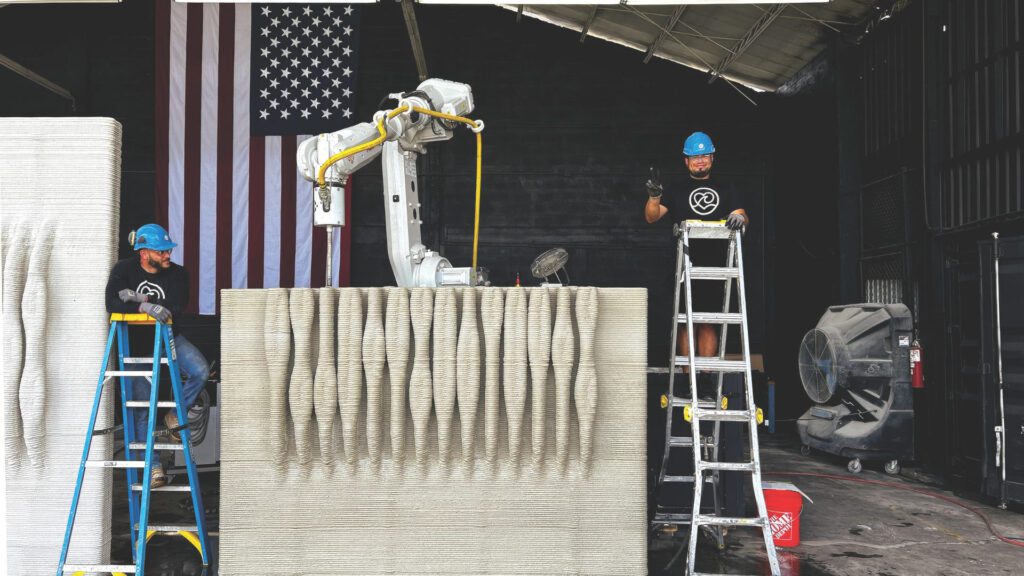
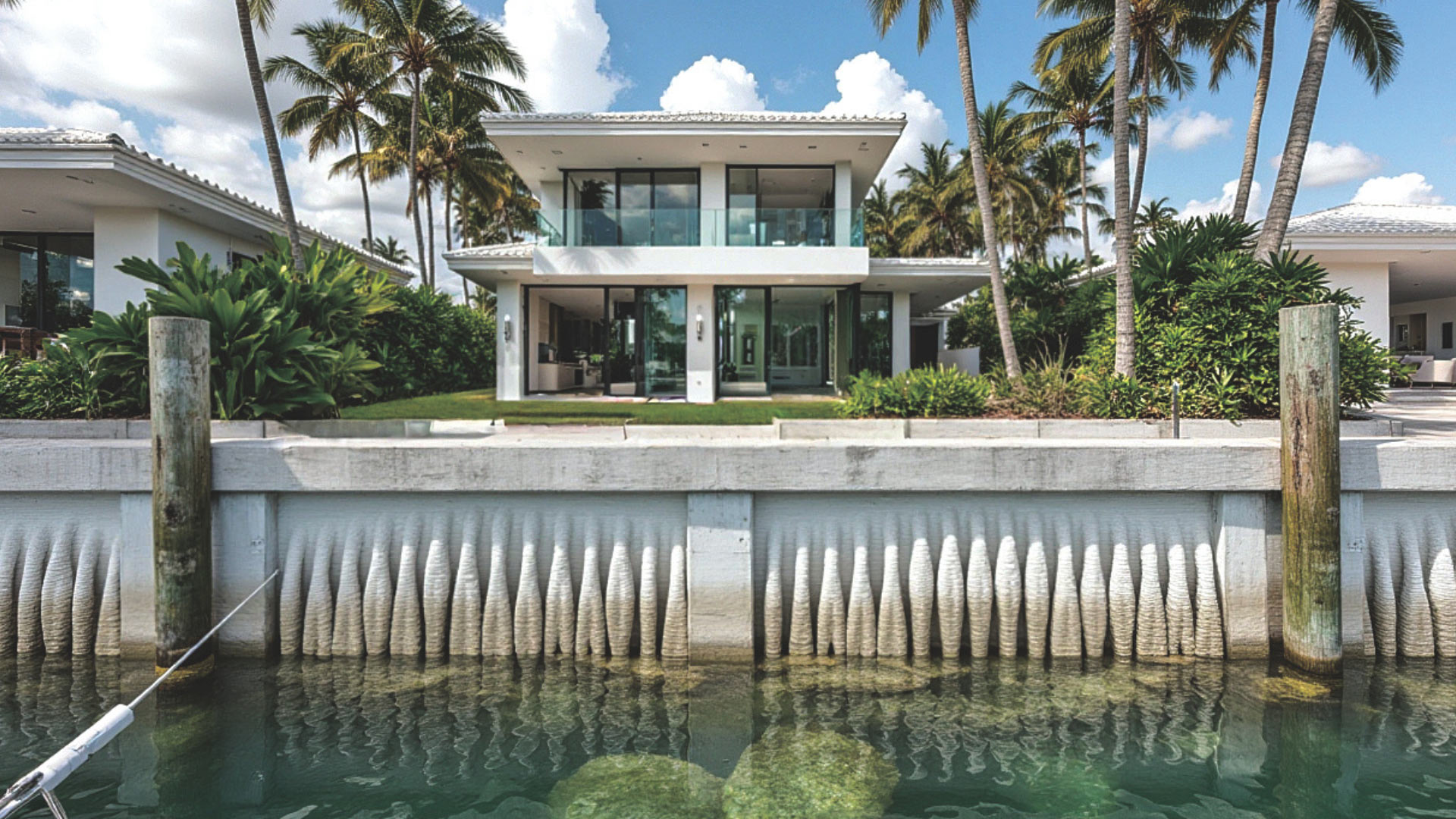
Freeman thinks they can do better. Kind Designs uses industrial-scale 3D printing to create “living seawalls,” marine-safe concrete barriers whose surfaces borrow from the irregular geometries of mangroves, coral formations, and tidal pools. Where a conventional seawall presents marine life with little more than a vertical slab, Freeman’s versions have pockets, ledges, cavities, and curves. Oysters attach. Algae grows. Barnacles settle in. Small fish find shelter. What was once simply a barrier begins to behave, however modestly, like an ecosystem.
The name Kind Designs is intentional. “Kind,” Freeman says, reflects the idea that infrastructure can serve
people without being hostile to the natural world. “Design” addresses something more immediately visible: why should an object occupying some of the most valuable waterfront real estate in the country be ugly?
Traditional seawalls, she says, are “at best, a blank canvas.” At worst, they are eyesores. Beauty, in Freeman’s telling, is not applied after the engineering is finished. It is part of the engineering itself. Through biomimicry, Kind Designs borrows forms nature has spent considerably longer perfecting than most architects.
Before industrial 3D printing, that complexity was difficult and expensive to reproduce in concrete. Decorative molds offered limited possibilities. Freeman jokes that you could stamp a bird onto a seawall, though the results were “pretty lame.”
A printer is less inhibited.
Layer by layer, Kind Designs can introduce curves, recesses, and intricate surface variations into enormous concrete panels. The walls are intelligent, too. Embedded sensors monitor temperature, salinity, pH, and wave force, while filter-feeding organisms attracted to their surfaces can help improve surrounding water quality.
There are few places where the proposition feels more relevant than Miami, where sea-level rise and flooding have migrated from abstract warnings into the realities of insurance, construction, and everyday life.
The business is moving nearly as quickly as the technology. Freeman says Kind Designs recently closed a $10 million funding round at a $70 million valuation. The company has grown from nine employees to 16 and is tripling production capacity while searching for five to 10 acres in Miami-Dade for a larger facility.
Miami may only be the beginning. Freeman says Kind Designs has secured its first New York City contract, with 65 projects in the pipeline there. South Carolina, California, the UAE, and Europe are also on the horizon.
The proposition is ambitious: hold back rising water, provide habitat, collect environmental intelligence and look rather good while doing it.
For a city that has always understood the value of appearances, it is an appropriately Miami solution. The seawall still has to keep the ocean where it belongs. Freeman simply sees no reason it cannot seduce a few oysters along the way.