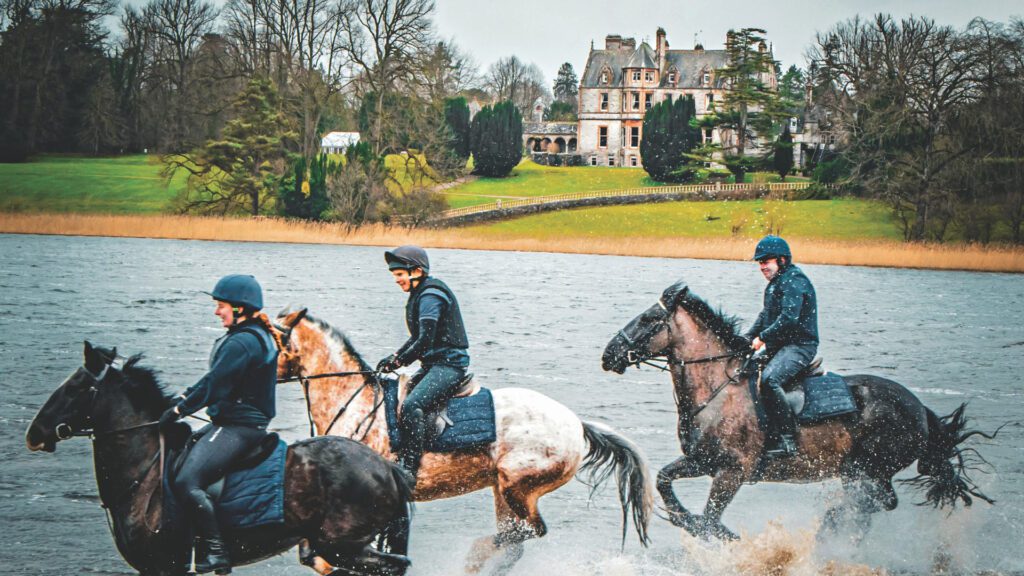
IN THE ROLLING EMERALD FIELDS OF IRELAND, THE ULTIMATE LUXURY ISN’T FOUND IN A SPA TREATMENT, BUT IN THE THUNDEROUS GALLOP TOWARD YOUR OWN WILDER SELF.
BY ANETTA NOWOSIELSKA
The Chinese zodiac, with its penchant for dramatics, has designated 2026 the Year of the Fire Horse. It is a classification that suggests a certain untethered speed—a refusal to remain in the stable, so to speak. For years, I had carried a version of this spirit as a private obsession: the image of myself at a full gallop across an open landscape. It was a vision borrowed from literature and film, entirely divorced from my actual experience with horses, which had been, until recently, occasional and decidedly low-velocity. I had sat atop horses, but I had never ridden them in the way that requires a soul-level contract between beast and ambition.
It was this “now or never” impulse that eventually brought me to the legendary, rain-softened turf of Castle Leslie in County Monaghan, Ireland. The pilgrimage was organized by Equus Journeys, an outfit that specializes in exactly this brand of high-stakes equestrian experiences. I have come to believe that we are in the midst of a quiet revolution in travel—a shift away from the sedative luxury of the massage table toward something more participatory. In Monaghan, the concept of wellness is found in full immersion; it reveals itself in the pursuit of passions and hobbies that force us out of our comfort zones and into “the beast”—a nature that is as challenging as it is beautiful.
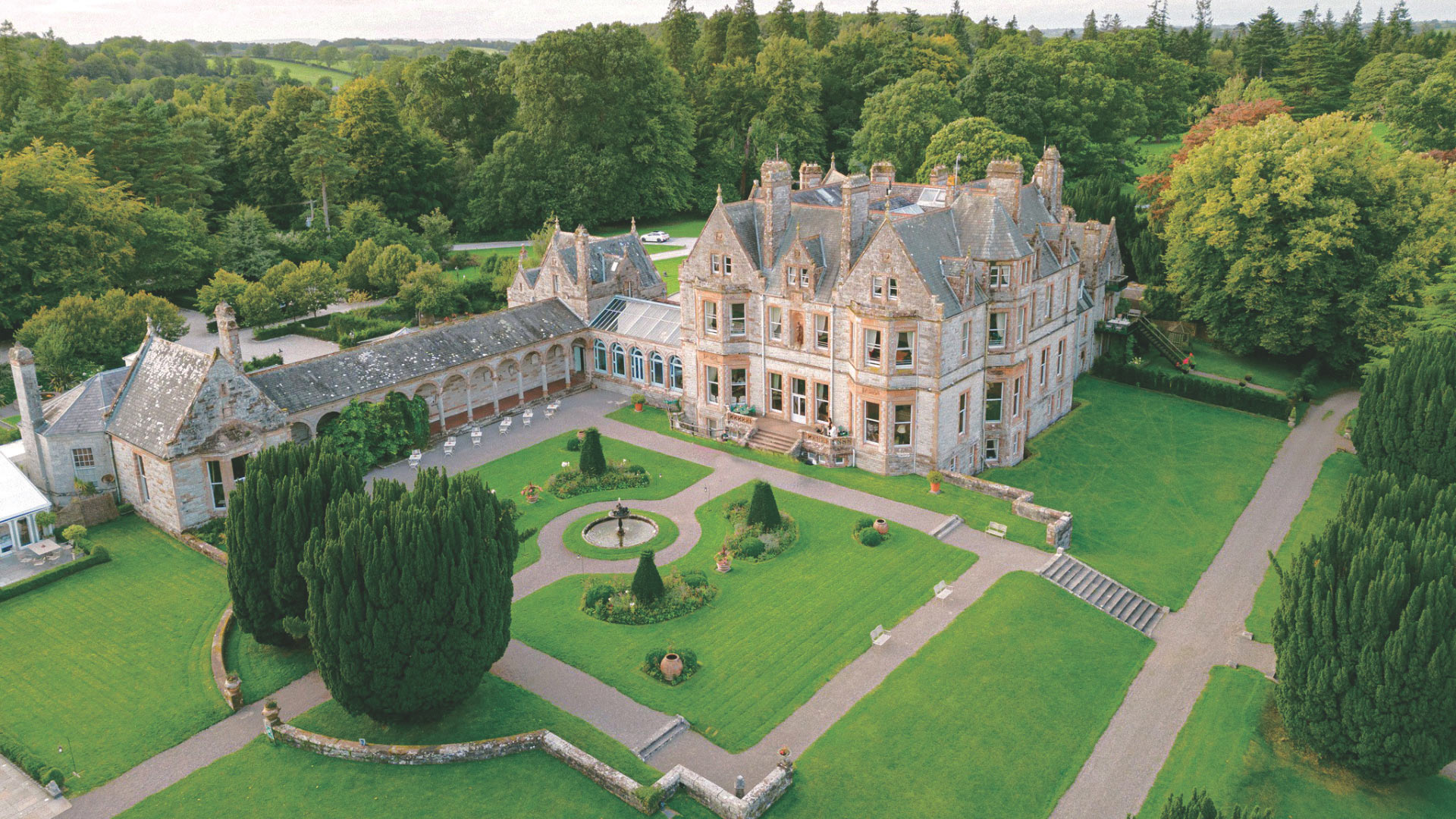
Arrival at the estate is a lesson in atmospheric reveal. Situated eighty minutes from the urban hum of Dublin—a distance of roughly 130 kilometers that feels like a slow fade into a different century—the property is a sprawling, thousand-acre kingdom that has remained in the hands of the Leslie family since the sixteen-seventies. It is one of the last great Irish estates still inhabited by its founding lineage, a fact that lends the air a certain thickness, as if the history of the place is held in the very oxygen.
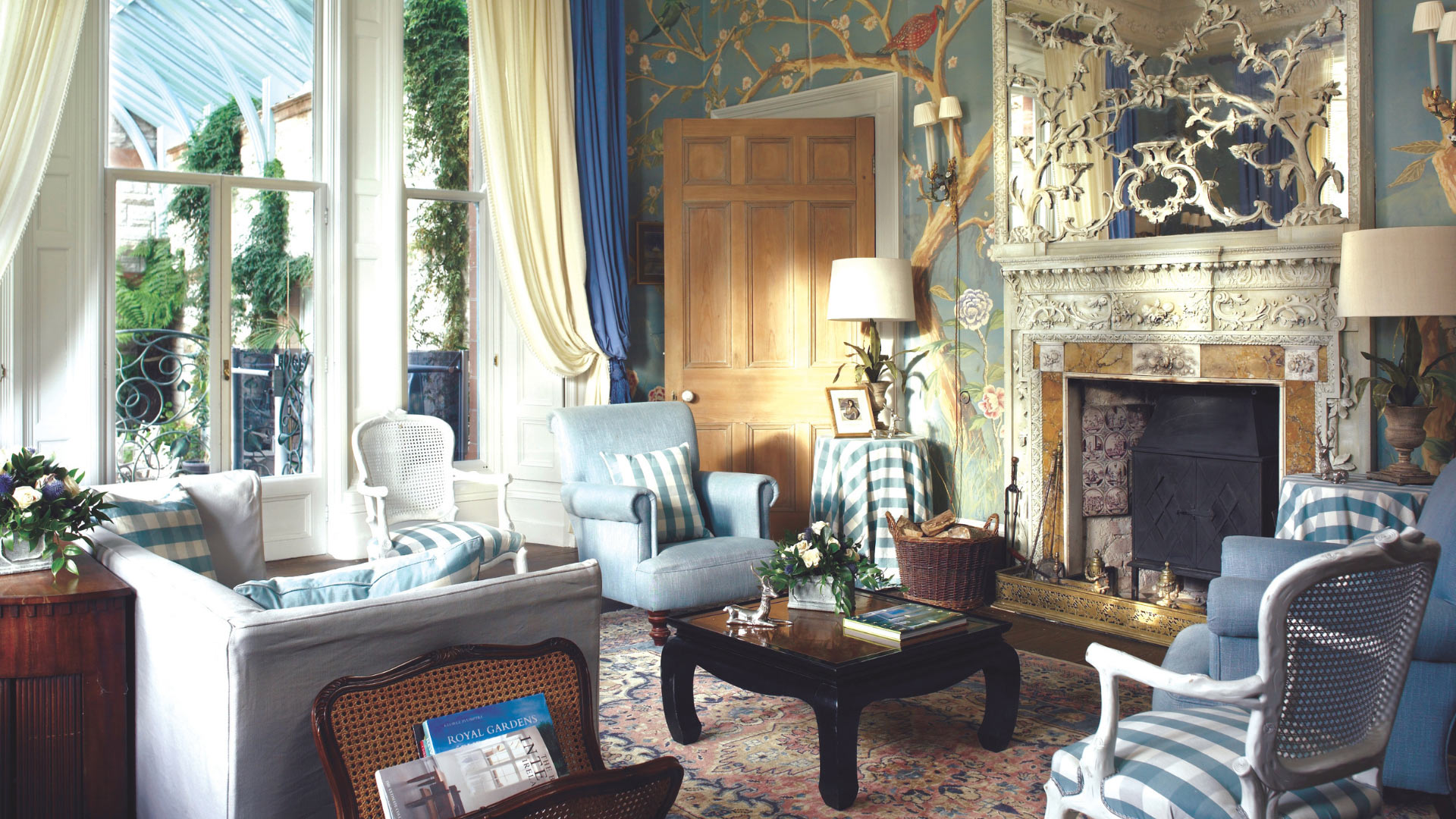
The Castle itself is a brooding masterpiece of Scottish Baronial architecture, designed by the firm of Lanyon, Lynn and Lanyon. It is a house of high ceilings and even higher stakes, famously hosting the nuptials of celebrities and the retreats of world leaders. I sought the more grounded accommodations of The Lodge. If the Castle is the estate’s ego, the Lodge is its id—a converted courtyard complex that smells of woodsmoke, wet wool, and the faint musk of the nearby stables. My room was the quintessential tale of Irish country-house living: heavy linens, deep-seated armchairs, and a freestanding Victorian roll-top bath that served as a nightly necessity for muscles newly acquainted with the physics of the saddle. The decor—a sophisticated palette of olive greens and warm taupes—evoked the heritage of a world I traveled across the Atlantic to experience. From my balcony, I watched the morning mist settle over Glaslough Lake, the water reflecting the silhouettes of the estate’s champion thoroughbreds.
This was not, strictly speaking, a holiday. It was a mission measured in the thud of hooves at the estate’s world-class Equestrian Centre. The facility is a cathedral for the horse lover, boasting a fifty-meter indoor arena and a cross-country course that has tested some of the most formidable riders in the British Isles. Irish equestrian expertise is famously unsentimental; it respects ambition but demands competence. For me, this order was reversed. I possess ambition in leaps—the kind that outpaces one’s actual ability. The curriculum is exhaustive—a progression from estate hacks across twenty-one miles of meandering bridleways to the technical precision of the show-jumping ring. A few days of training taught me the fundamental truth of the sport: a horse is a mirror. It reflects your hesitations back at you with uncomfortable accuracy.
Between these trials of the spirit, I retreated to Snaffles Restaurant, located in the heart of the Lodge. Under the hand of Executive Chef Aaron Duffy, the room—with its high-vaulted ceiling and dramatic open hearth—acts as a culinary homage to the Monaghan soil. Duffy operates like a regional alchemist, sourcing ingredients from the estate’s own gardens and the surrounding farmlands with a relentless rigor. The food is unapologetic in its earthiness: roast beef, rested to a precise tenderness, and duck-fat roasted potatoes that exist in the memory long after the meal is over. Duffy’s cooking manages to be sophisticated without being precious, designed for the ravenous appetite that only a day in the saddle can produce.
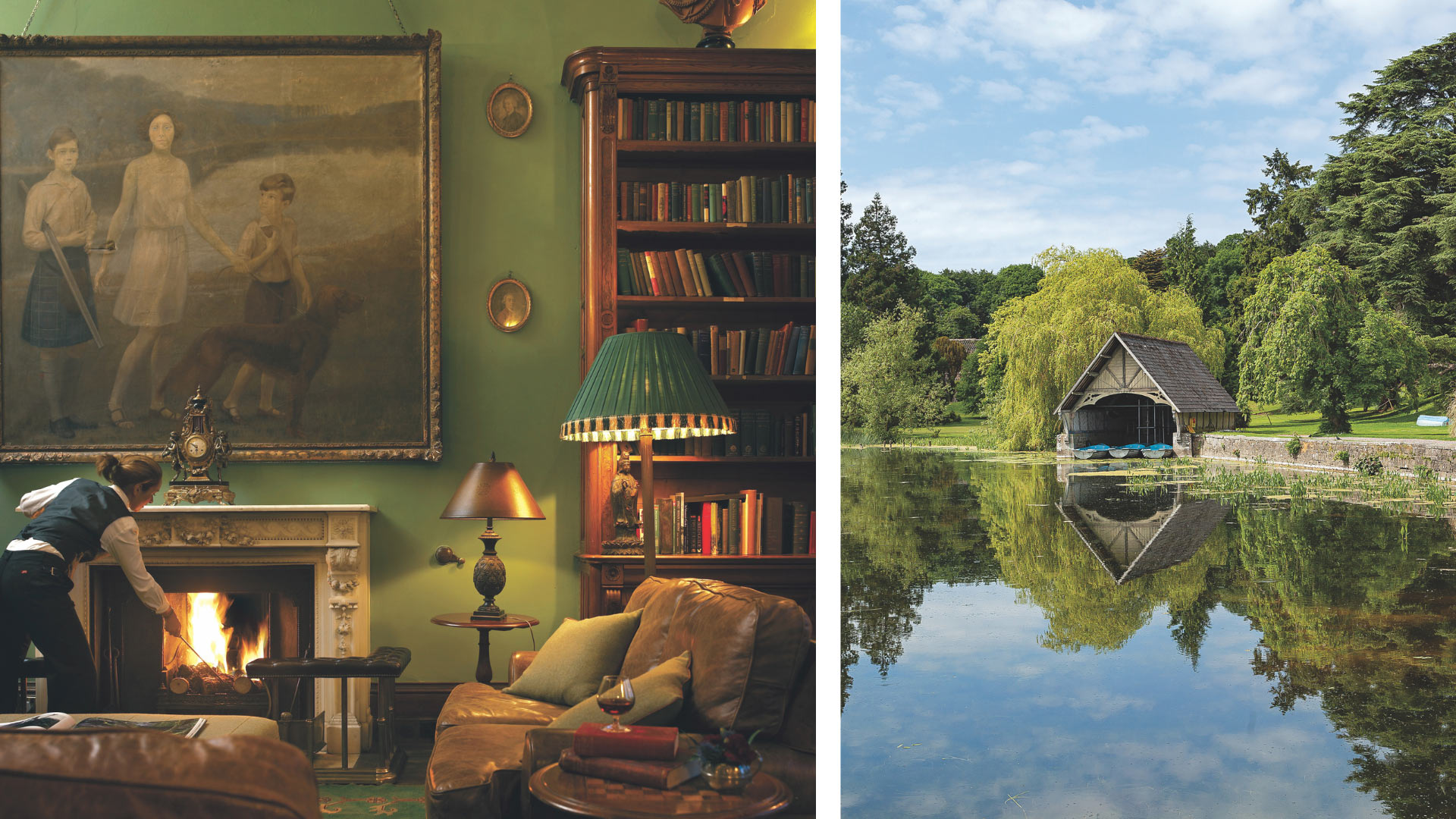
When the boots were finally pulled off, the ritual moved to the hearth. There is no more effective way to decompress the nervous system post riding than with a glass of Redbreast by a roaring fire. In the Lodge’s drawing room, the amber glow and the low, polyglot hum of fellow riders from all over the world create a cordiality that feels earned. In this environment, the day’s physical demands lose their sharpest edges, hardening into a bone-deep confidence.
Yet, that confidence was merely the preamble for the final day. The transition from the sedentary warmth of the fire to the bracing reality of the open field felt like a bridge I had been building since arrival. Then came the moment.
The Fire Horse meets the Irish Thoroughbred.
We were out in the wide-open spaces, the property stretched out like a green carpet beneath a bruised sky. My instructor signaled. I felt the shift in the animal—the sudden coil of power, the rhythmic tension of a creature designed for speed. In the past, I would have tightened my grip, retreating into the analytical mind. But this year, I had promised myself the surrender. I gave the signal. The world blurred. My breathing quickened; so did my pulse.
There is no sound quite like the drumbeat of a gallop on turf; it is a primal frequency that vibrates through your bones. As we thundered across the fields, the wind whipping away the last of my hesitations, I realized that this was the kind of freedom I had been seeking. I left Castle Leslie with a deeper understanding of the horse, certainly, but also a more pointed understanding of my own capacity for risk—a capacity I sought to test thousands of miles away from home. It was a confrontation that became a realization I’ve reached in mid-life: that the most difficult things—the ones that require us to leave the safety of the trot—are invariably the things that make the journey worth the ride.
THE EXPERT
EYE Equus Journeys is the premier architect of global equestrian travel, handling every nuance from elite mounts to storied estates. My stay at Castle Leslie was impeccably choreographed by their team, blending world-class riding with historic excursions. Beyond Ireland, Equus Journeys curates high-end expeditions worldwide, prioritizing safety, authenticity, and luxury. Plan your ride:
www.equus-journeys.com