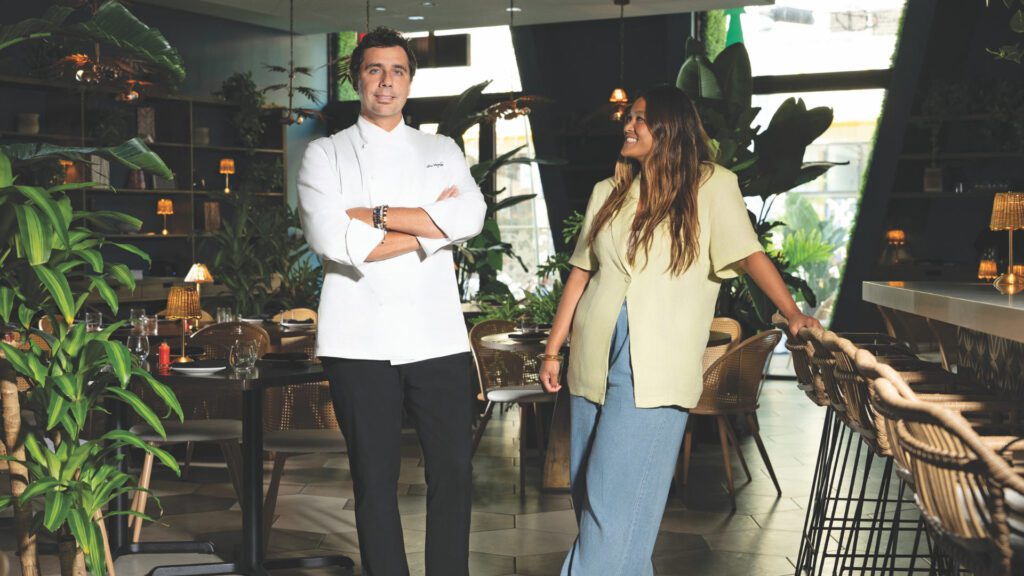
From New York to Aspen to the Hamptons, Wayan has built a devoted following. Now, as Cédric Vongerichten expands his South Florida presence, he has found a city whose global outlook mirrors his own.
BY ERIN MICHELLE NEWBERG
For Chef Cédric Vongerichten and his wife and business partner, Ochi, Miami was never a question of if. It was a question of when.
Long before Wayan arrived in Wynwood this spring, the couple had been quietly exploring opportunities in South Florida. What began as curiosity evolved into a successful residency that introduced Miami diners to the French-Indonesian restaurant that has earned acclaim in New York, a place in the Michelin Guide, and recognition on Esquire’s Best New Restaurants in America list. Now, with plans already underway for another South Florida venture, it is clear their relationship with the region is only beginning.
“Miami had been on our radar almost immediately after opening Wayan in New York,” Cedric says. “Before COVID, we were already exploring opportunities there, particularly in Wynwood.”
The attraction was immediate. Miami’s international energy, tropical climate, diverse cultural influences, and deep appreciation for hospitality felt remarkably aligned with the spirit of Wayan itself. For Cédric, the city’s connection to the water, its vibrant food scene, and its multicultural identity created an environment where the restaurant’s French-Indonesian perspective felt naturally at home.
Most importantly, Miami diners embraced it.
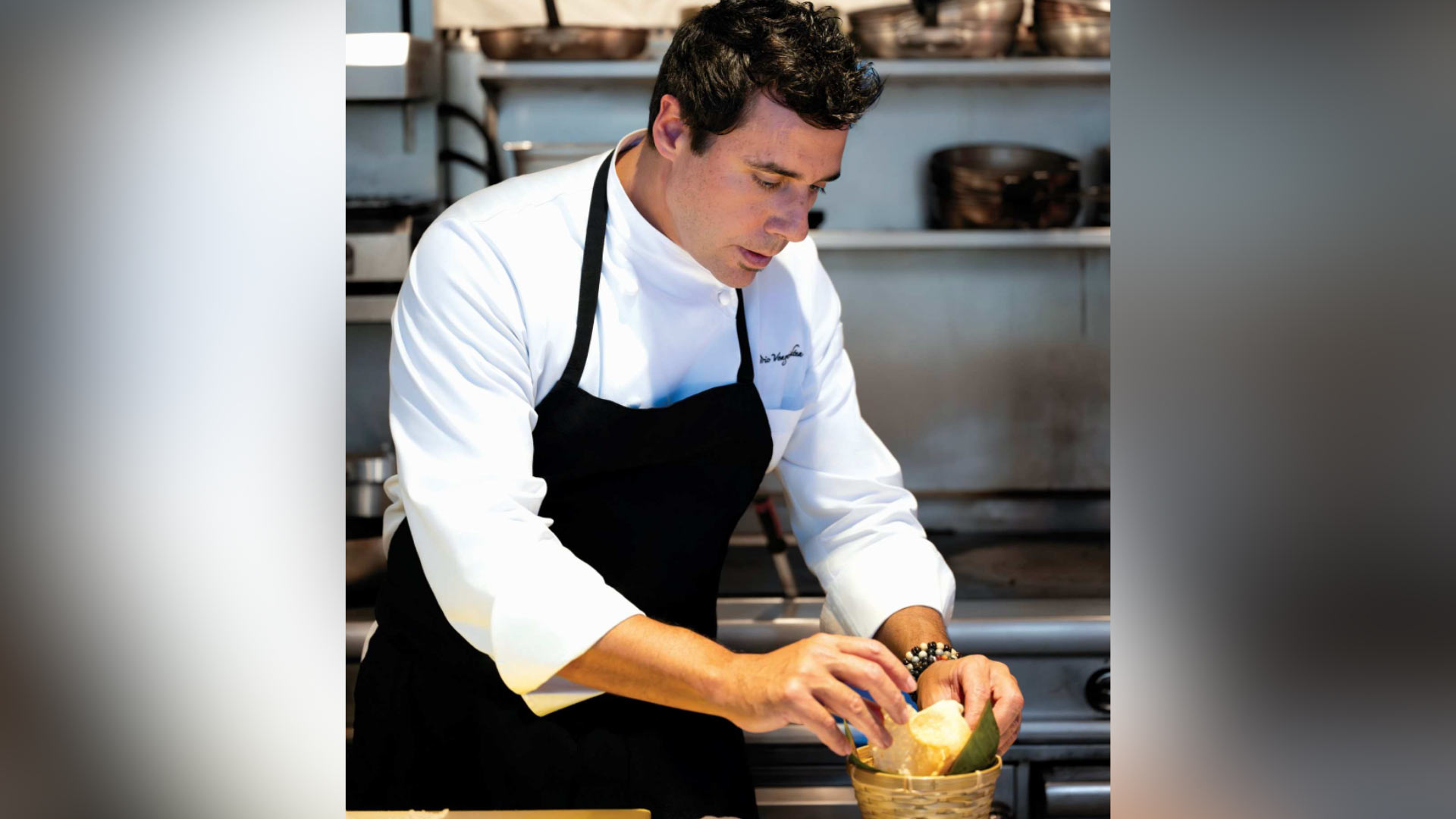
Returning guests familiar with Wayan from New York and Aspen came back, while newcomers quickly connected with the restaurant’s communal style of dining and bold Southeast Asian flavors. One particularly memorable collaboration emerged with Miami’s V Gelato, resulting in specialty flavors including avocado and cheddar ice cream—an inventive partnership that reflected the creative spirit of both brands.
“The response was incredibly positive,” Cedric says. “It was rewarding to see Miami guests embrace the experience.”
For Cédric and Ochi, the residency was also another step in a carefully considered expansion strategy. Rather than rushing growth, the couple prefers to immerse themselves in a market before making long-term commitments. It is a philosophy that has helped transform Wayan from a celebrated Manhattan restaurant into a growing hospitality brand with locations and activations spanning New York, Aspen, the Hamptons, and now South Florida.
At the heart of that success is a shared vision. The pair met while attending the Culinary Institute of America and quickly discovered they complemented each other both personally and professionally. Today, Cédric oversees culinary operations while Ochi manages hospitality, licensing, permitting, and the operational side of the business.
Together, they have created a restaurant concept that reflects both of their backgrounds. Cédric brings classical French training, while Ochi’s Indonesian heritage provides the foundation for a cuisine that remains surprisingly underrepresented on the global stage.
While comparisons to his father, legendary chef Jean-Georges Vongerichten, are inevitable, Cédric has never been interested in recreating someone else’s success. Instead, he has focused on building something distinctly his own.
One lesson, however, remains central to his philosophy.
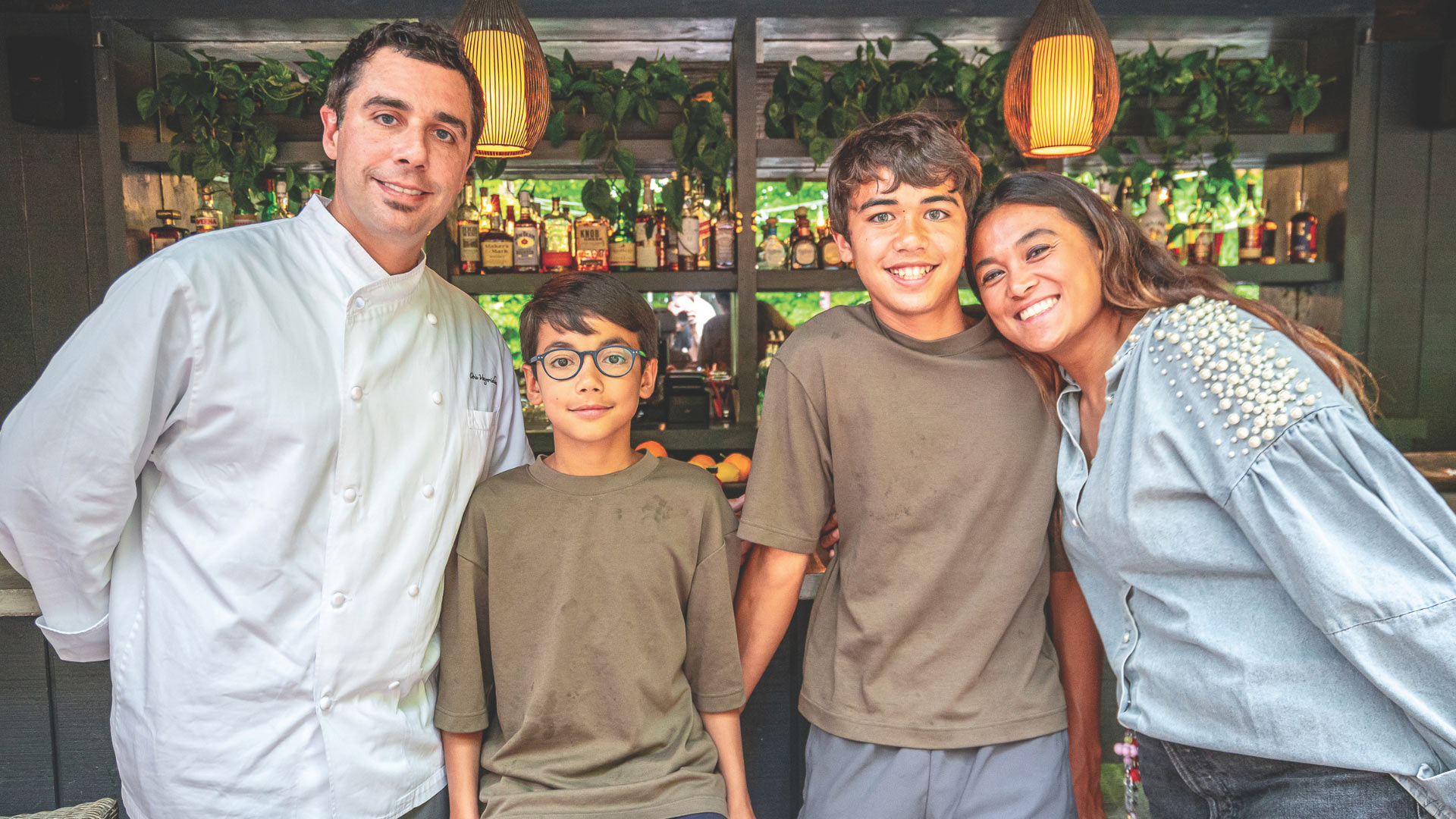
“My father taught me that the quality of the product is everything,” he says. “That’s why we’re constantly at the market sourcing the best fish, produce, and ingredients possible. If the product is exceptional, you’re already most of the way there.”
Ironically, when Cédric first expressed interest in becoming a chef, his father encouraged him to consider other career paths.
“At the time, I didn’t understand it,” Cédric says. “Now, as a parent, I do. He wanted to make sure it was truly my passion and not something I was doing because of him.”
Born in Bangkok and raised between New York, Portugal, and France, Cédric learned early that food is shaped by culture, geography, and memory. Those influences would eventually become central to the culinary language he and Ochi developed together, a style that blends French technique with the layered, vibrant flavors of Indonesia.
That commitment to ingredients and authenticity became especially important in Miami, where local sourcing shaped much of the menu. Rather than importing products from New York, Cédric worked closely with Florida producers, incorporating local seafood, seasonal produce, and regional specialties into the residency.
“The seafood is exceptional,” he says. “There are so many outstanding local products available. We wanted to work with what Florida does best.”
That meant sourcing local red snapper, yellowtail, shrimp, tomatoes, lettuces, and seasonal produce whenever possible. While finding some specialty Indonesian ingredients occasionally proved challenging, he describes Florida’s ingredient landscape as exceptional.
Markets tell you so much about a place,” he says. “You learn what’s in season, what people are eating, and what ingredients matter most to that community.”
For a chef whose life has unfolded across several continents, Miami may be the most natural destination yet. The city’s international outlook, cultural diversity, and appetite for new ideas make it fertile ground for the kind of cuisine Cédric and Ochi have spent years refining, one that effortlessly bridges continents, traditions, and techniques.
If Miami’s dining scene has entered a new chapter, it is one defined by curiosity and global influence. In that sense, Wayan feels less like an arrival and more like a reflection of where the city is headed. The marriage of French precision and Indonesian flavor may once have felt unexpected. In today’s Miami, it feels exactly right.