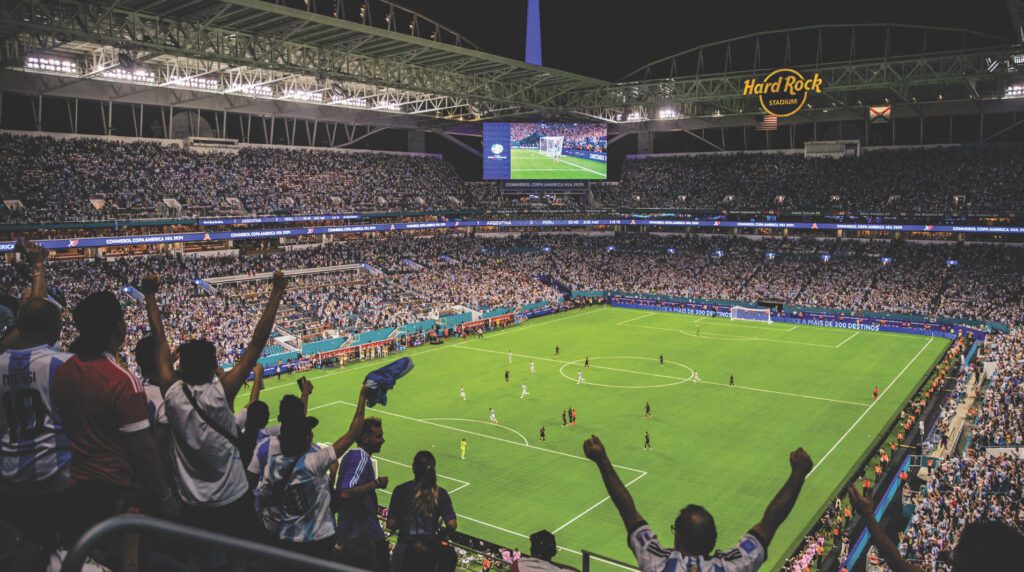
A SNAPSHOT OF THE SCALE, SPECTACLE, AND ECONOMIC FORCE BEHIND THE FIFA WORLD CUP’S ARRIVAL IN MIAMI.
BY CHIARA ELBAZ
7 matches
Miami will host seven FIFA World Cup matches, all taking place at Hard Rock Stadium in Miami Gardens. The schedule stretches across multiple stages of the tournament, beginning with group-stage play before moving into the knockout rounds and concluding with the Bronze Final. Miami is one of only a handful of cities selected to host this many matches.
14 teams
As many as 14 national teams could take the field across Miami’s seven matches. Because several of the later games depend on tournament results and advancing teams, the final lineup remains uncertain. The schedule already includes countries such as Brazil, Portugal, Colombia, Scotland, Saudi Arabia, and Uruguay, with additional teams still to be determined.
90 minutes
Split into two 45-minute halves, a World Cup match lasts 90 minutes. But during knockout play, the action can continue beyond regulation through extra time and penalty shootouts, turning a scheduled match into a much longer night.
65,000+ fans
More than 65,000 spectators can fill Hard Rock Stadium for a single World Cup match, creating one of the tournament’s largest in-person audiences.
1,000,000 visitors
While more than 65,000 fans can pack Hard Rock Stadium for a single match, South Florida as a whole could welcome up to one million visitors during the FIFA World Cup. The tournament’s reach is expected to extend across Miami-Dade and surrounding areas, bringing an international wave of tourism to the region.
$1.3 billion
The FIFA World Cup is projected to generate approximately $1.3 billion in economic impact across South Florida. Organizers estimate the effects will extend far beyond ticket sales, with spending to benefit hotels, restaurants, transportation, tourism, and local businesses throughout Miami-Dade, Broward, Palm Beach, and even Florida.